

If your air conditioner heat mode is not working, the most likely culprit is something you can check yourself in five minutes: a dirty filter or an incorrect thermostat setting. If those are fine, it gets more serious. That is when you need a licensed technician.
This guide walks through every cause in order of likelihood, from the quickest self-fix to the faults that require a professional. Before you call anyone, work through this list. For a breakdown of what each AC mode does, including heat, dry, cool, and auto, see our full modes guide.
How Heat Mode Works on a Reverse Cycle AC
Most Australian homes use a reverse cycle air conditioner, a system that both heats and cools using a refrigerant circuit. In heat mode, the unit reverses its normal operation: instead of pulling heat out of your home, it extracts heat from the outside air and pushes it inside. This works even when it is cold outside, because there is still usable heat energy in outdoor air down to around -10°C.
When heat mode is running correctly, the indoor unit blows warm air steadily and the outdoor unit pulls heat in. If yours is blowing cold air, running but not warming the room, or not switching on at all, something in that process has broken down.
Is It Actually a Fault? (Or Just the Defrost Cycle?)

Before you assume your system is broken, check one thing: is it in the defrost cycle?
In cold weather, ice can build up on the outdoor coil. To clear it, the unit temporarily reverses its operation, which means the indoor unit blows cool or room-temperature air for a short period. This is completely normal. You may also notice steam rising from the outdoor unit and hear the system running differently than usual.
The defrost cycle typically lasts between 2 and 10 minutes. Once it finishes, the unit switches back to heating and warm air resumes. If it does not switch back after 10 minutes, or if this happens every time you run heat mode, then it is not just the defrost cycle. There is an underlying issue worth investigating.
Why Your Air Conditioner Heat Mode Is Not Working: 5 Likely Causes
These causes are ranked by likelihood. Start at the top. Most problems are resolved within the first two checks.
1. Dirty or Blocked Filters
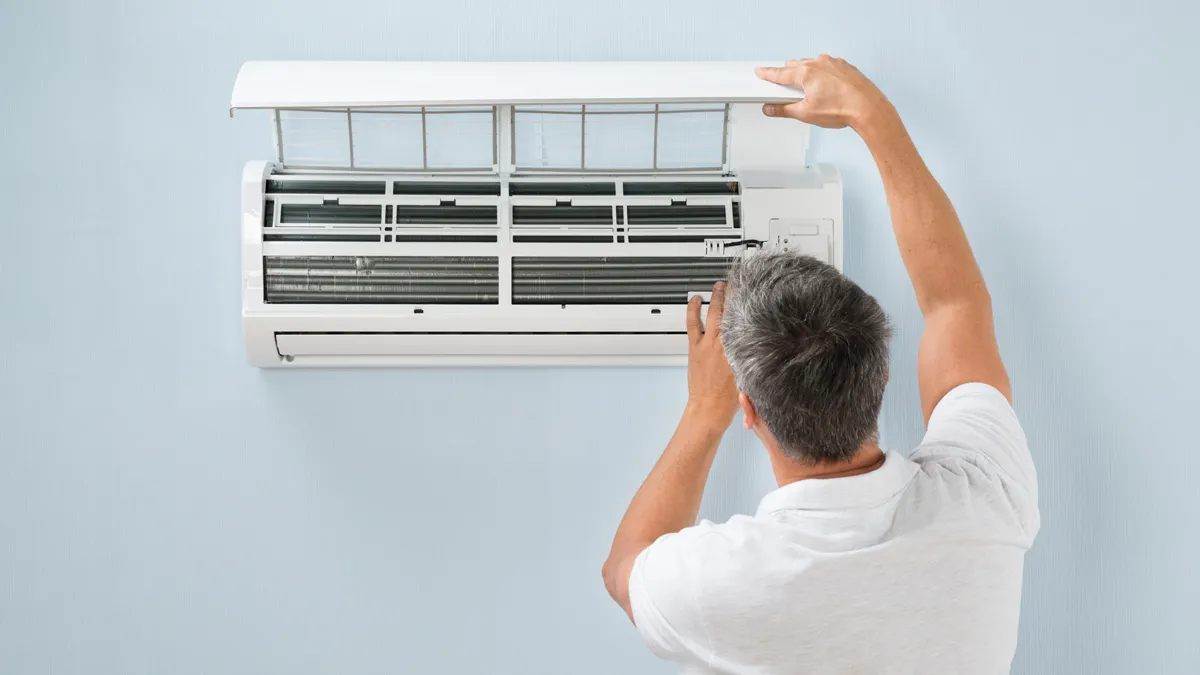
This is the most common reason a reverse cycle air conditioner stops heating effectively. Blocked filters restrict airflow through the indoor unit, which reduces the amount of warm air it can push into the room. In severe cases, the system will overheat and shut itself off as a protective measure.
Self-check: Remove the indoor unit’s filter panel (usually clips off without tools), pull out the filters, and hold them up to the light. If you cannot see light through them, they need cleaning. Rinse with warm water, let them dry fully, and refit. Run heat mode again.
2. Incorrect Mode or Thermostat Settings
The second most common cause, and the easiest to fix. The unit may be set to cool mode, fan-only mode, or the target temperature may be set below the current room temperature, which tells the system it has nothing to do.
Self-check: On your remote, confirm the mode is set to Heat (usually shown as a sun icon). Set the target temperature to at least 2 to 3 degrees above the current room temperature. For example, if the room is 18°C, set it to 21°C or higher. If the display shows a snowflake icon, the unit is in cool mode, not heat mode.
3. Outdoor Unit Blocked or Iced Over
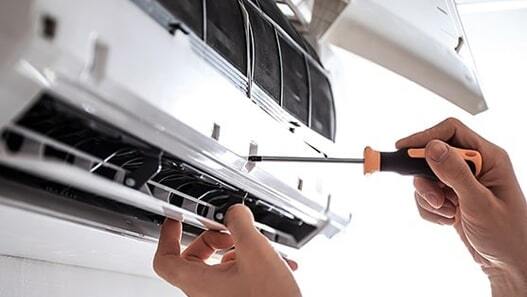
The outdoor unit needs clear airflow to extract heat from the outside air. If the area around it is blocked by leaves, garden debris, or a fence that is too close, the system struggles to pull enough heat in. In Sydney’s cooler months, the outdoor coil can also ice up beyond what the defrost cycle can handle on its own.
Self-check: Walk outside and look at the outdoor unit. Clear any debris from around and above the unit. There should be at least 30cm of clearance on all sides. If you can see ice on the coil, turn the system off and let it defrost naturally. Do not use a heat source on it. Once thawed, run heat mode again and monitor whether icing returns.
4. Refrigerant Leak
Refrigerant is the substance that carries heat through the system. If there is a leak, the system loses its ability to transfer heat effectively. You will notice this as gradually weakening heating performance over weeks or months. The system runs but the room never quite gets warm. In some cases you may hear a faint hissing sound near the indoor or outdoor unit, or notice ice forming on the refrigerant lines.
Self-check: You cannot fix a refrigerant leak yourself. Handling refrigerants requires an ARCtick licence. If you suspect a leak, weak heating despite clean filters and correct settings, ice on the lines, or a hissing sound, stop running the system and call a technician. Continuing to run it with low refrigerant can damage the compressor. Some Fujitsu units will display a fault code when refrigerant pressure drops. Check our guide to Fujitsu fault codes and flashing lights if your unit is showing an error.
5. Faulty Reversing Valve
The reversing valve is the component that switches the refrigerant flow direction between heating and cooling. When it fails, the system typically stays stuck in one mode. The clearest sign of a faulty reversing valve: the unit cools perfectly but will not heat at all. If it can cool, the compressor and refrigerant are working. The problem is specifically the direction switch.
Self-check: There is no self-fix here. A reversing valve replacement is a technical repair that requires gas work and disassembly of the refrigerant circuit. If your unit cools fine but will not heat, this is the most likely mechanical cause. Book a diagnostic with a licensed technician.
When to Call a Professional

You have checked the filters. The settings are correct. The outdoor unit is clear. The unit is still not heating. At this point, stop troubleshooting and book a service.
Call a licensed technician if you notice any of the following:
- The unit cools normally but produces no heat at all
- Ice is forming on the refrigerant lines or outdoor coil and not clearing after a defrost cycle
- You can hear a hissing or bubbling sound from the indoor or outdoor unit
- Heating performance has gradually declined over weeks or months
- The unit displays a fault code or error light
- The system shuts off shortly after starting in heat mode
Attempting to diagnose or repair refrigerant issues or a reversing valve fault yourself risks voiding your manufacturer’s warranty and causing additional damage to the compressor. For brands like Mitsubishi, fault diagnosis requires specific tools. See our Mitsubishi air conditioning repairs page for what to expect from a service call.
Frequently Asked Questions
Why is my air conditioner blowing cold air in heat mode?
The most common reasons are the defrost cycle (normal and temporary), incorrect mode settings, or a dirty filter restricting airflow. Check your remote to confirm the unit is in heat mode and that the target temperature is set above the current room temperature. If it blows cold continuously after 10 minutes of running, clean the filters and check the outdoor unit for ice or blockage.
How do I know if my reversing valve is faulty?
The clearest sign is a unit that cools normally but produces no heat at all. If the cooling function works, the compressor and refrigerant are intact. The fault is specific to the valve that switches between modes. A reversing valve fault requires a licensed technician to diagnose and replace.
Can I fix my AC not heating myself?
You can clean the filters, check and adjust the settings, and clear the outdoor unit yourself. These three steps resolve the majority of heat mode problems. Refrigerant leaks, reversing valve faults, and any repair involving the refrigerant circuit must be handled by a licensed technician. Attempting these yourself can void your warranty and damage the compressor.
How long does the AC defrost cycle last?
Typically 2 to 10 minutes. During this time the indoor unit may blow cool or room-temperature air. The outdoor unit may produce steam. Once the defrost cycle finishes, the system returns to heating and warm air resumes. If the unit does not return to warm air after 10 minutes, or if it keeps triggering defrost cycles repeatedly, that points to an underlying fault.
Why does my AC cool fine but not heat?
A unit that cools but will not heat points specifically to the reversing valve. This component controls which direction refrigerant flows, cooling in one direction, heating in the other. A working cooling function confirms the compressor and refrigerant are intact. The fault is the direction switch, not the refrigerant circuit itself. This is a job for a licensed technician.
Still Not Heating? Book a Repair in Sydney
If it’s still not heating after working through this list, Air Max Air Conditioning services Sydney and surrounds. We carry out same-week diagnostic appointments across the region, including the Southern Highlands and Sutherland Shire.
Call us on (02) 4648 4811 or book a service online. If we can fix it, we will. If it’s still under warranty, we will tell you that too.
Air Max Air Conditioning is a licensed HVAC contractor serving Sydney, the Southern Highlands, and Sutherland Shire. All refrigerant work is carried out by ARCtick-licensed technicians.


